
The book on Anaesthesia for Emergency Surgery: Rapid Response and Management provides a comprehensive exploration of the principles, challenges, and strategies that define the practice of anaesthesia in critical surgical settings. It begins with an introduction to emergency anaesthesia, highlighting how it differs from elective anaesthesia in terms of urgency, unpredictability, and the compromised physiological state of patients. The introduction sets the tone by emphasizing the crucial role anaesthesiologists play in rapid stabilization and safe perioperative management, where time-sensitive decision-making often determines survival. The text then delves into preoperative assessment in emergencies, focusing on the unique constraints of limited time, incomplete patient histories, and unstable clinical conditions. It explores how anaesthesiologists must rely on rapid, focused evaluations that prioritize airway, breathing, circulation, and neurological status while simultaneously identifying life-threatening derangements. This naturally leads to a discussion of risk stratification and prioritization, where the book examines frameworks that guide clinicians in determining surgical urgency, balancing the risks of delayed intervention against the dangers of proceeding with unoptimized patients. The nuances of triage in mass casualty scenarios and the ethical dimensions of prioritization are also considered in this context. The book outlines strategies for rapid sequence induction, techniques to minimize aspiration risk, and approaches to managing anticipated and unanticipated difficult airways. Emphasis is placed on preparation, the use of alternative airway devices, and surgical airway options, ensuring readers understand the importance of readiness in life-threatening situations. The discussion then transitions into anaesthetic techniques for emergency surgery, where the choice of induction agents, maintenance strategies, and neuromuscular blockers are explored in relation to the patient’s physiological state. The role of ketamine, etomidate, and other agents in maintaining stability is discussed alongside challenges in balancing depth of anaesthesia with hemodynamic compromise.
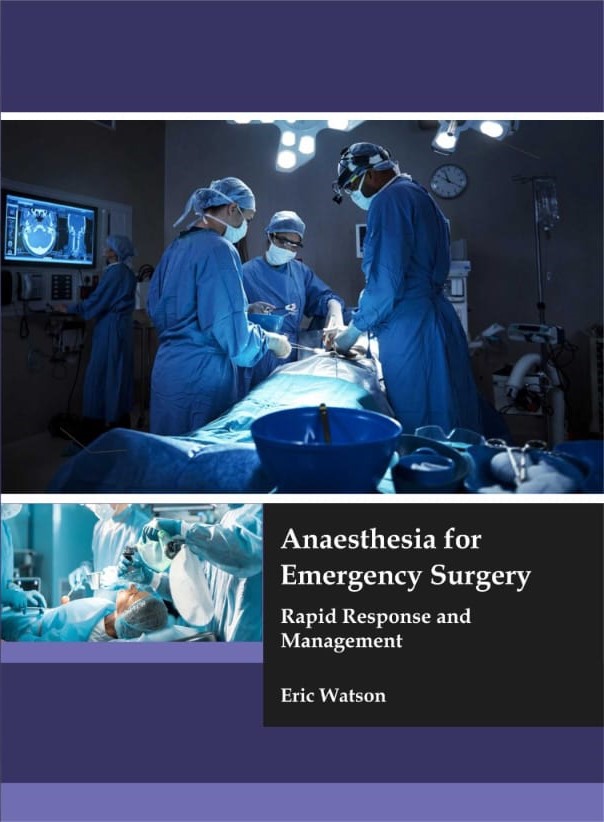
Anaesthesia for Emergency Surgery: Rapid Response and Management
$229.99
Author Eric Watson
Binding Hardback
ISBN 9798897070084
Language English
Pages 300
Subject Category Anaesthesiology
Year of Publication 2026



Reviews
There are no reviews yet.