
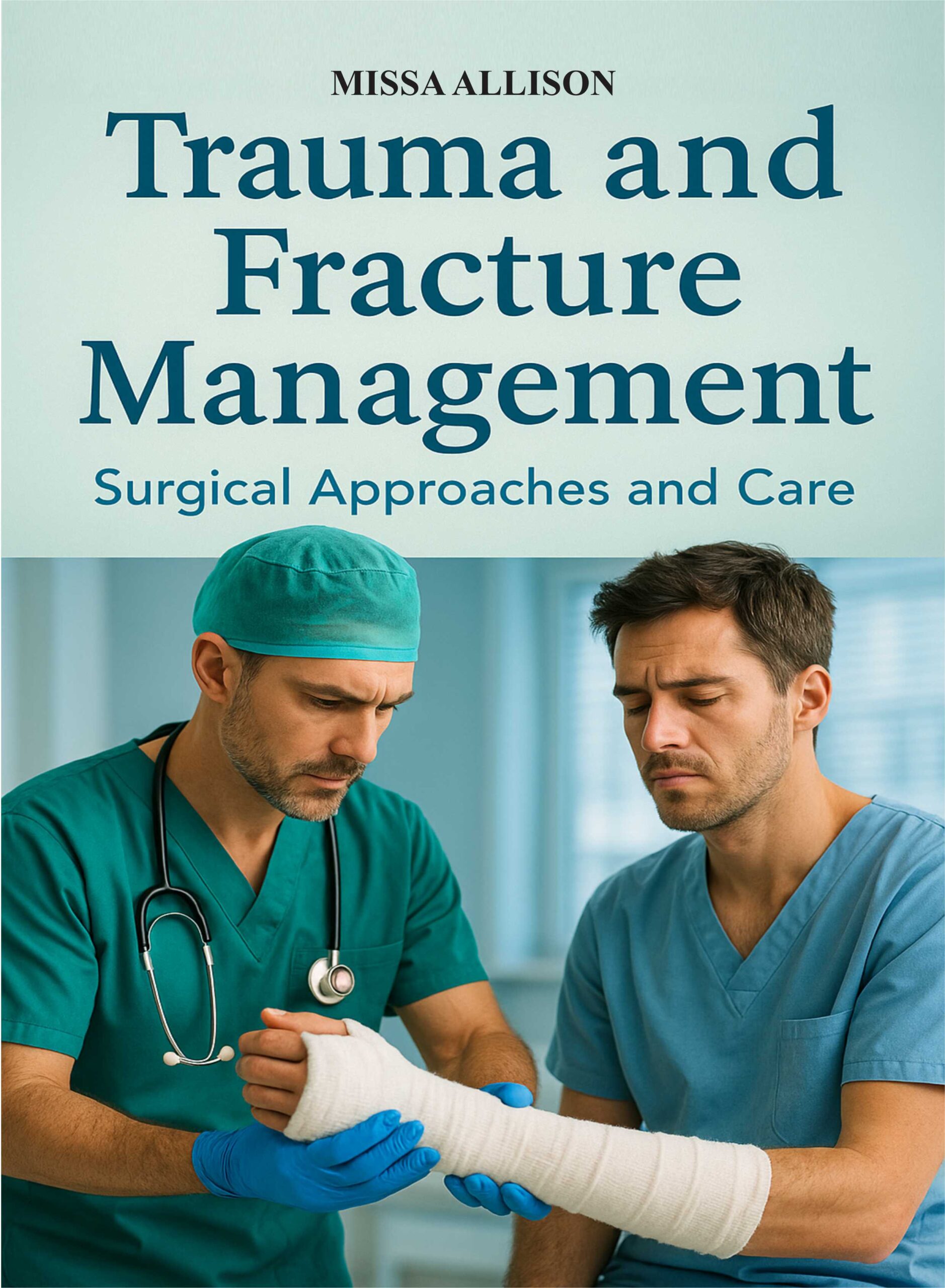
Trauma and Fracture Management: Surgical Approaches and Care serves as an essential and comprehensive guide for medical professionals navigating the complex and high-stakes field of orthopedic trauma. This definitive text meticulously constructs a journey that begins at the moment of injury and follows through to long-term rehabilitation, offering a holistic framework for patient care. The foundation is laid with an in-depth exploration of the core principles of trauma and fracture management, establishing the critical objectives of anatomical reduction, stable fixation, and the preservation of blood supply to create an optimal biological environment for healing. These principles are the golden threads that run throughout every subsequent chapter, informing decisions from the simplest fracture to the most complex poly-traumatic injury.
The initial encounter with a trauma patient is thoroughly detailed in the segment on clinical assessment and diagnostic modalities. This section emphasizes the paramount importance of a systematic approach, beginning with the Advanced Trauma Life Support (ATLS) protocol to address immediate life-threatening conditions before focusing on the musculoskeletal system. It guides the clinician through a meticulous physical examination, teaching them to recognize the classic signs of fracture and soft tissue injury, and then seamlessly transitions into the strategic use of diagnostic tools. The interpretation of standard radiographs is covered with precision, but the text truly excels in its discussion of advanced imaging, clarifying the specific indications for computed tomography (CT) scans in visualizing complex intra-articular fractures and magnetic resonance imaging (MRI) for assessing occult fractures, ligamentous injuries, and soft tissue viability.
With the diagnostic foundation secure, the book delves into a methodical, region-specific analysis, starting with upper limb trauma management. This section balances the need for skeletal stability with the paramount importance of preserving the hand and upper extremity’s exquisite mobility and function. It covers a spectrum of injuries from common clavicle fractures to complex intra-articular fractures of the elbow and wrist, providing evidence-based protocols for both non-operative and surgical interventions. Similarly, the section on lower limb trauma management focuses on the restoration of axial alignment, joint congruity, and weight-bearing capacity, addressing challenges from femoral neck fractures in the young to tibial plateau and pilon fractures, always with an eye on the goal of ambulatory recovery.



Reviews
There are no reviews yet.