
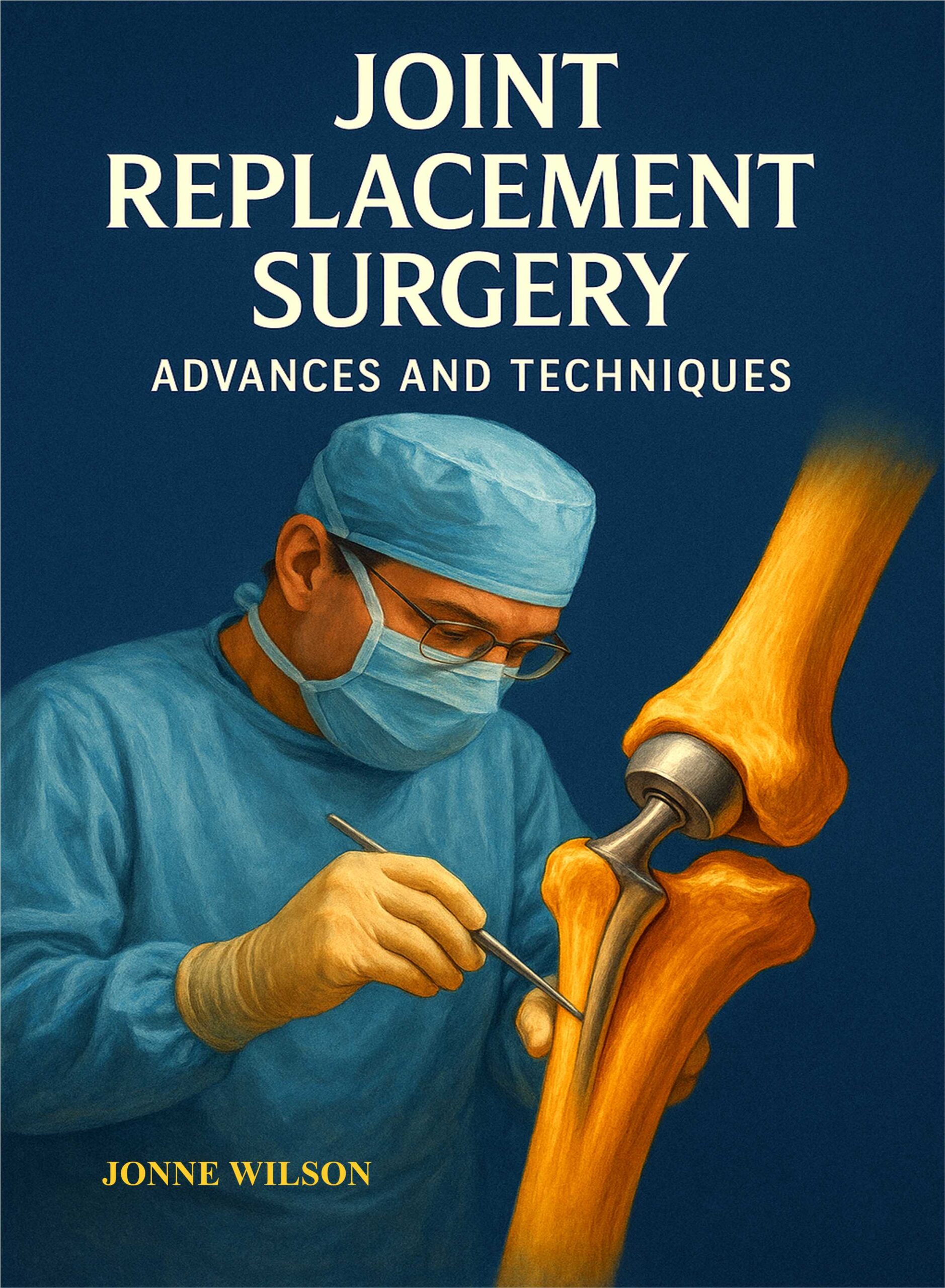
Joint Replacement Surgery: Advances and Techniques stands as a comprehensive and authoritative text that meticulously guides the reader through the entire spectrum of modern arthroplasty, from foundational principles to the management of complex revisions. The book begins by establishing a crucial foundation in “Fundamentals of Joint Replacement Surgery,” delving into the core biomechanics, biomaterial science of implants, and the fundamental principles of prosthetic design that underpin all successful surgical outcomes. This groundwork is logically and necessarily followed by an in-depth exploration of “Preoperative Evaluation and Planning,” a section that rightly emphasizes the non-operative cornerstone of success, detailing systematic patient assessment, meticulous risk stratification, sophisticated imaging interpretation, and the critical process of templating to ensure the surgical procedure is tailored to the individual’s unique anatomy and pathology.
The scope of the book then elegantly expands beyond the hip and knee to encompass the upper extremity, beginning with “Shoulder Arthroplasty.” This segment adeptly compares and contrasts the indications and techniques for anatomic total shoulder replacement, reverse shoulder arthroplasty, and hemiarthroplasty, highlighting the critical importance of rotator cuff integrity and glenoid bone stock in guiding surgical decision-making. Further distally, the text delves into the more intricate realm of “Elbow, Wrist, and Hand Arthroplasty,” detailing the specialized implants and technically demanding procedures for these smaller joints, where the balance between restoring motion and maintaining stability is particularly delicate. Completing the anatomic survey, the section on “Ankle and Foot Arthroplasty” reflects the significant advances in these fields, moving beyond arthrodesis to explore the viable options for joint-preserving replacement that seek to maintain a more physiologic gait. However, the life of a prosthetic joint is not always indefinite, making the chapter on “Revision Arthroplasty” an indispensable resource. This part of the book confronts the considerable challenges of bone loss, implant extraction, and instability, providing a structured methodology for preoperative workup and the execution of complex reconstruction, often involving augments, cages, and allografts.



Reviews
There are no reviews yet.