
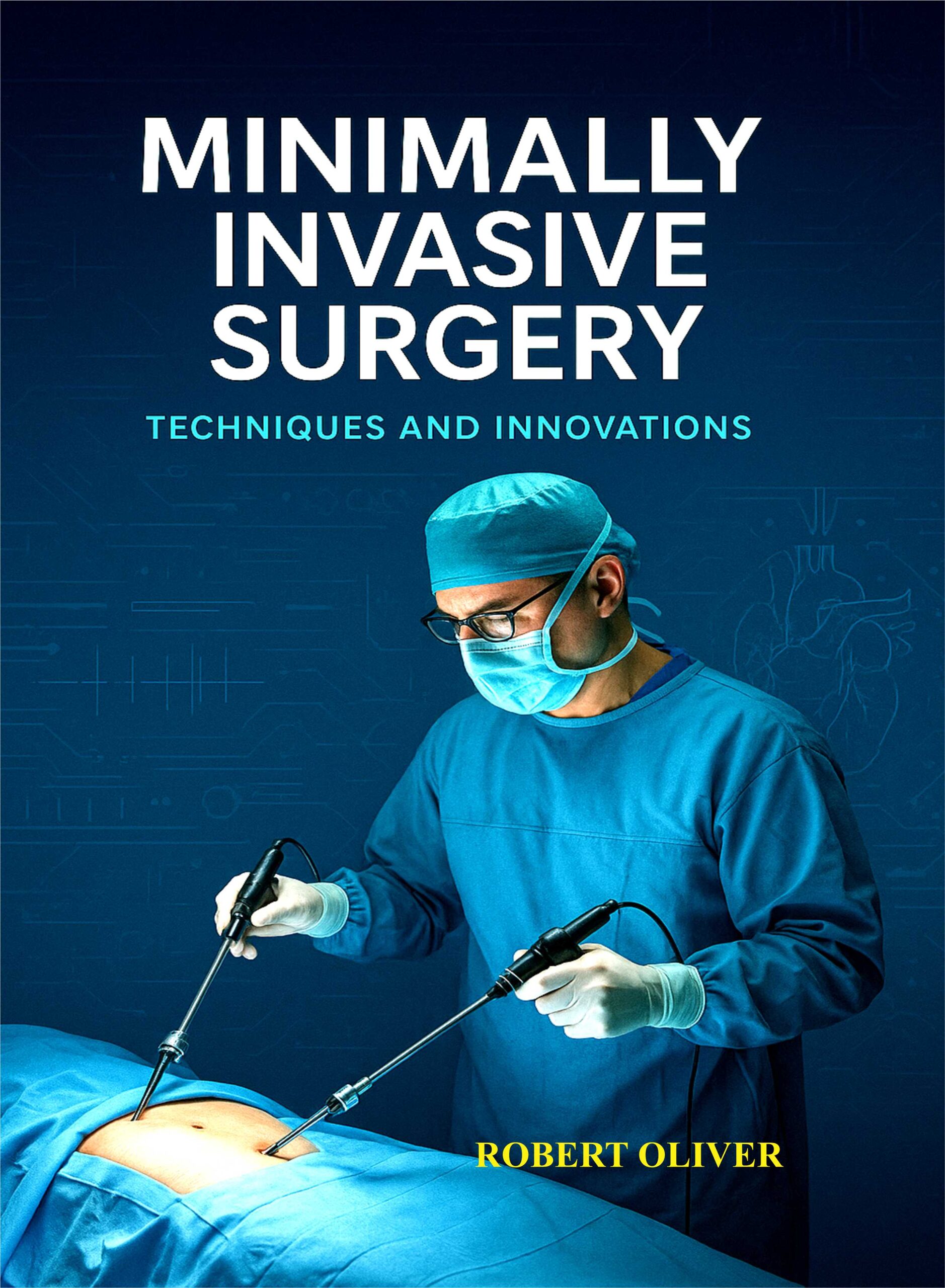
The book Minimally Invasive Surgery: Techniques and Innovations provides an in-depth exploration of the remarkable transformation that surgical practice has undergone over the past few decades. It begins by chronicling the evolution of minimally invasive surgery, tracing its roots from early laparoscopic procedures to the sophisticated techniques of today. The narrative emphasizes how the shift from large, open incisions to smaller, precise entry points has fundamentally changed patient care, reducing postoperative pain, minimizing complications, shortening hospital stays, and accelerating recovery. By highlighting this evolution, the book frames minimally invasive surgery not just as a technical advancement but as a revolutionary approach that has redefined the standards of surgical excellence.
Central to the discussion are the core principles of laparoscopic surgery, which form the foundation of minimally invasive procedures. The book delves into the importance of strategic incision placement, optimal visualization through high-definition cameras, and the careful coordination of specialized instruments. These principles enable surgeons to navigate complex anatomy safely and efficiently while limiting tissue trauma. The text further illustrates how mastery of these techniques requires both technical skill and a deep understanding of anatomy, physiology, and surgical ergonomics.
The advent of robotic assistance marks another pivotal chapter in the narrative. Robotic platforms offer enhanced dexterity, tremor elimination, and three-dimensional imaging, allowing surgeons to perform intricate procedures that were previously challenging or impossible through traditional laparoscopy. The book examines robotic-assisted techniques across various specialties, including urology, gynecology, and gastrointestinal surgery, highlighting their impact on surgical precision, patient outcomes, and postoperative recovery. Advanced laparoscopic and robotic procedures are described in detail, emphasizing innovations in dissection, suturing, and reconstructive approaches that push the boundaries of what can be achieved through minimally invasive means.
Finally, the text looks toward the horizon of innovation, considering future developments such as artificial intelligence integration, miniaturized robotic systems, and novel energy devices. By combining historical context, technical insight, and a forward-looking perspective, the book provides a comprehensive resource for understanding minimally invasive surgery. It serves as an essential guide for surgeons, trainees, and healthcare professionals seeking to appreciate the evolution, current practices, and future potential of this transformative field.


Reviews
There are no reviews yet.