
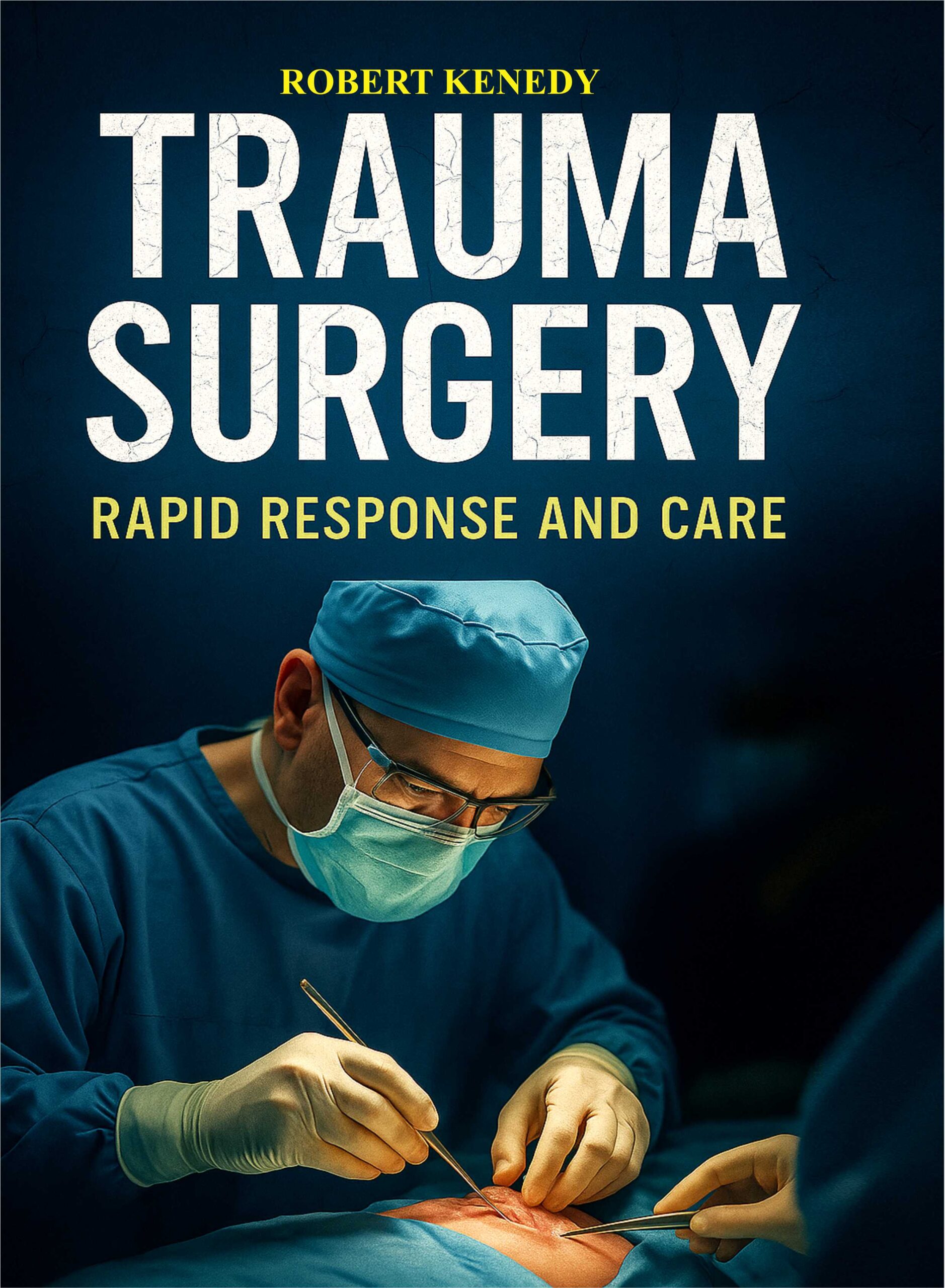
This book delivers a systematic investigation into trauma surgery, charting the critical pathway from initial injury to definitive operative care. It begins with the fundamental principles of the Advanced Trauma Life Support protocol, detailing the rapid sequence of primary and secondary surveys designed to identify and address immediate threats to life. The narrative explains the management of a compromised airway, the urgent need for breathing support through needle decompression or tube thoracostomy for a tension pneumothorax, and the control of catastrophic hemorrhage through direct pressure, tourniquets, or resuscitative endovascular balloon occlusion. The text places significant emphasis on the concept of the “golden hour,” that brief window following major trauma where prompt surgical intervention can dramatically improve a patient’s chance of survival.
A central focus rests on the diagnostic tools that guide surgical decision-making, particularly the focused assessment with sonography for trauma (FAST) exam and the role of whole-body computed tomography in revealing internal injuries. The work then transitions to the operative strategies for specific life-threatening conditions. It describes the surgical exposure and techniques for managing solid organ injuries to the liver and spleen, balancing the need for hemorrhage control with the desire for organ preservation. It details the repair of penetrating and blunt injuries to the great vessels, the control of gastrointestinal perforations, and the management of complex pelvic fractures that disrupt the retroperitoneal space. The book further explores the damage control surgery philosophy, a staged approach where the initial operation focuses only on controlling bleeding and contamination, with planned re-operation for definitive repair once the patient’s physiological state has stabilized.
The narrative extends beyond the initial operation to the ongoing resuscitation in the intensive care unit, where the lethal triad of hypothermia, acidosis, and coagulopathy is aggressively corrected. It covers the management of traumatic brain injury, including the monitoring of intracranial pressure and the indications for decompressive craniectomy. The text also addresses the unique challenges of orthopedic trauma, from the external fixation of severe open fractures to the management of compartment syndrome. This journey presents trauma surgery not as a single event, but as a continuous, dynamic process that demands rapid assessment, technical mastery in the operating room, and meticulous post-operative care. It reveals this surgical specialty as a high-stakes discipline where a team’s coordinated speed, skill, and judgment are directly applied to mend the most severe forms of human injury.


Reviews
There are no reviews yet.