

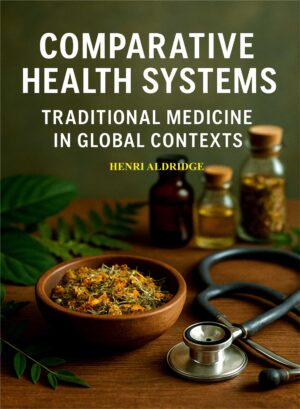
The book Traditional Healing Philosophies offers a profound and comprehensive exploration into the diverse and ancient medical systems that continue to shape wellness practices across the globe, arguing for their thoughtful integration within contemporary clinical frameworks. It begins by establishing the deep philosophical bedrock of these traditions, moving beyond mere technique to examine the core cosmological principles that define health as a state of harmonious balance, whether between the three doshas of Ayurveda, the yin and yang forces of Traditional Chinese Medicine (TCM), or the four humors of Unani-Tibb. This foundational section posits that understanding these worldviews is not an academic exercise but a clinical necessity, as diagnosis and treatment are inextricably linked to a holistic perception of the individual embedded within their environment. The text then meticulously transitions these principles into practical application, with detailed chapters on Ayurveda and TCM in clinical practice. Here, the reader encounters the sophisticated diagnostic tools of pulse and tongue analysis, the strategic use of dietary and lifestyle prescriptions, and the therapeutic aims of practices like Panchakarma or acupuncture, all presented with a clear eye on modern patient care and evidence-informed adaptation.
Further expanding its scope, the work provides critical examinations of Homeopathy’s law of similars and its approach to personalized therapeutics, and the rich, systematic tradition of Unani Medicine, tracing its Greco-Arabic roots and its enduring formulations. With respect and scholarly rigor, it also delves into the often-oral, community-based wisdom of Indigenous and Tribal healing traditions, highlighting their vital role in cultural identity and ecological knowledge, while addressing the ethical imperatives of preservation and respectful collaboration. The exploration continues into the mind-body therapies derived from these ancient systems, such as yoga, meditation, and qi gong, analyzing their mechanisms for reducing stress and enhancing self-regulation within a therapeutic context. A substantial focus is placed on the vast pharmacopeia of herbal and natural medicines, scrutinizing their bioactive constituents, potential for drug-herb interaction, and the crucial journey from traditional use to standardized clinical application within an evidence-based paradigm.
Reviews
There are no reviews yet.