

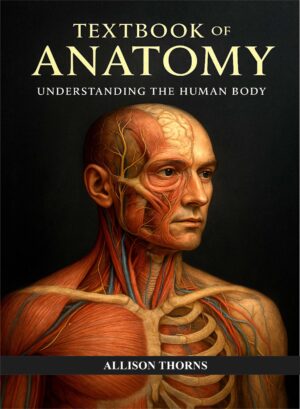
Functional Anatomy: Body Structures and Their Roles is a comprehensive exploration of the human body’s major systems, with a focus on how anatomical structures are designed to perform specific and interconnected functions. The book begins with an introduction to functional anatomy, defining it as the study of how body parts work individually and together to enable movement, maintain health, and support life. It emphasizes that anatomy is more than memorizing names of body parts it’s about understanding the purpose behind each structure and how they contribute to human function. This foundational perspective sets the stage for a deeper, system-by-system examination of the body.
The skeletal system is presented as the structural framework of the body, providing shape, support, and protection for vital organs. It is also central to movement, as bones act as levers and joints serve as pivot points for muscle action. The discussion includes bone composition, types of bones, and joint classification, illustrating how their design enhances both mobility and stability.
Following this, the muscular system is detailed, with particular attention to how skeletal muscles generate movement and maintain posture. The book explains the microscopic structure of muscle fibers, the mechanism of muscle contraction, and how muscles work in coordinated groups to produce smooth, purposeful movements. It also highlights the importance of tendons and muscle tone in stabilizing the body during both activity and rest.
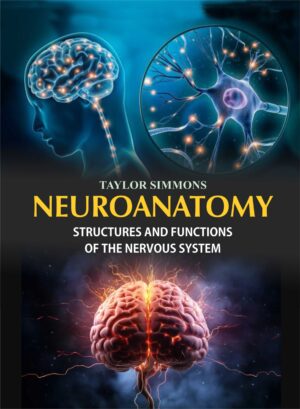
The nervous system is explored next, with a focus on its critical role in control and coordination. The book outlines the central and peripheral nervous systems, the flow of information from sensory receptors to the brain, and how motor commands are sent back to muscles. The importance of reflexes, voluntary motion, and the brain’s integrative functions are explained in a way that connects anatomy to real-life bodily responses and behaviors.
The endocrine system is introduced as the body’s communication system via hormones. It explains how glands such as the pituitary, thyroid, and adrenal glands secrete hormones that regulate growth, metabolism, stress response, and more. The anatomical location and structural characteristics of these glands are discussed in relation to their specific hormonal functions.



Reviews
There are no reviews yet.