
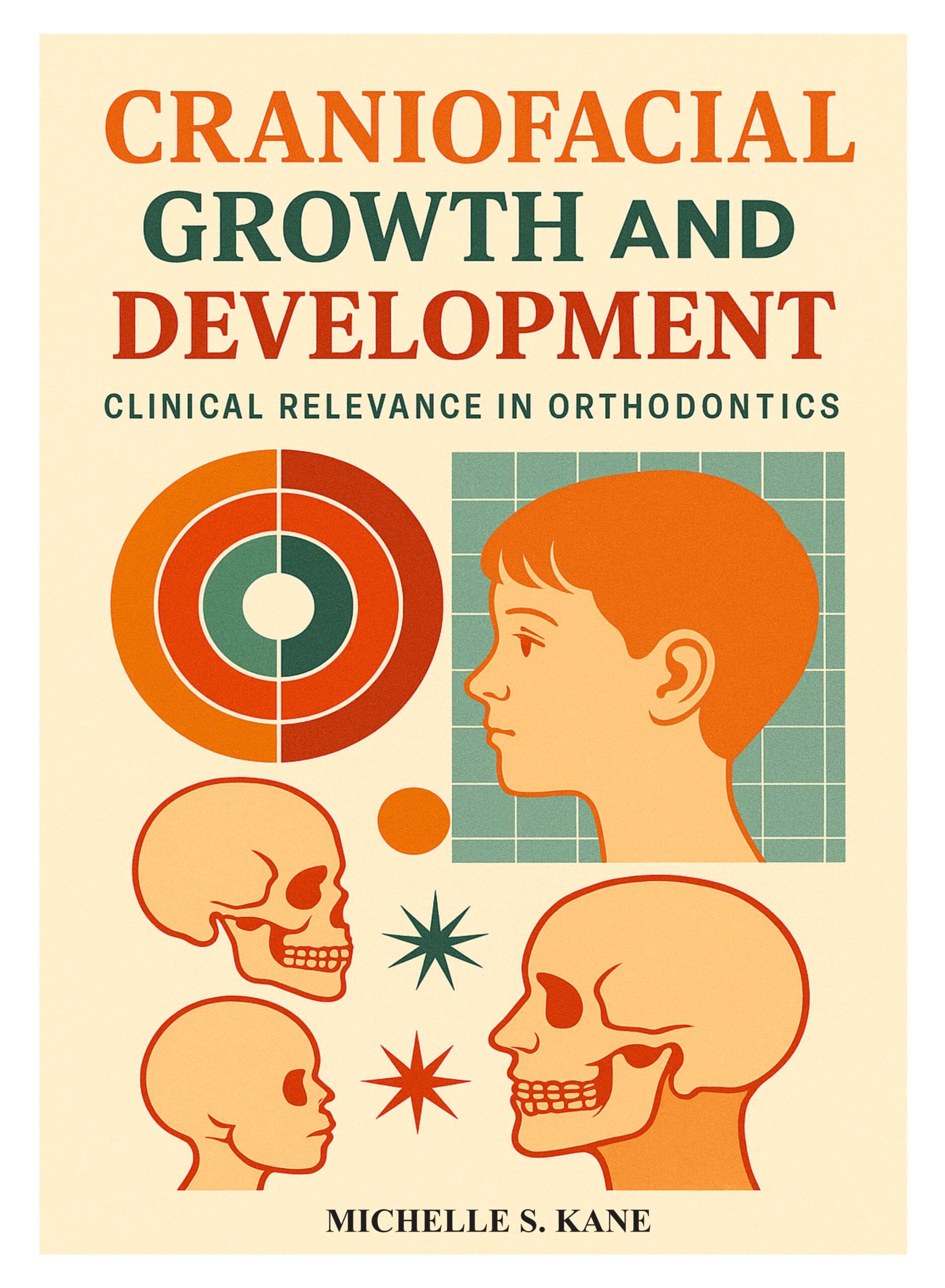
The book titled Craniofacial Growth and Development: Clinical Relevance in Orthodontics presents a biological, anatomical and clinical aspects of facial growth with a strong emphasis on their influence in orthodontic decision making. It begins by building a clear foundation of craniofacial growth, describing the developmental mechanisms that shape the facial skeleton from infancy through adolescence. The foundational chapters help readers understand that the craniofacial complex is not static but a changing structural system influenced by genetics, physiology, biomechanics and environmental inputs. The book provides an in-depth overview of the anatomy of the craniofacial region, highlighting the cranial base, maxilla, mandible and associated soft tissues, while explaining how each component develops individually and in relation to one another to contribute to facial form, occlusion and functional balance. The reader gains an appreciation for the integrated nature of the system, where skeletal growth patterns and soft-tissue responses work together to shape the face.
To strengthen the theoretical grounding, the text discusses growth theories in orthodontics that shaped the field over time. Concepts such as the genetic theory, sutural dominance theory, functional matrix hypothesis and more recent bio-mechanobiological models are examined to demonstrate how scientific understanding has evolved in studying craniofacial development. This theoretical framework supports clinical interpretation and assists practitioners in recognizing how external factors interact with genetic potential to influence facial growth. The book further outlines assessment of craniofacial growth, providing detailed explanations of cephalometrics, clinical examination, skeletal maturity indicators and growth prediction methods. It shows how these assessments allow orthodontists to evaluate developmental trends effectively and make treatment decisions rooted in evidence rather than assumption. The material is structured to reinforce how early, accurate diagnosis increases treatment predictability.
A distinctive feature of the book is its attention to how craniofacial growth changes across life stages. It examines growth during childhood, pubertal acceleration and late adolescent maturation, and explains how each period presents unique treatment opportunities and limitations. Abnormal craniofacial growth patterns, including Class II and Class III skeletal discrepancies, vertical dysplasia and asymmetries, are described not merely as malocclusion categories but as manifestations of altered developmental processes. The book emphasizes the need for clinicians to identify such deviations early enough to prevent worsening of structural imbalance. Discussions on orthodontic treatment timing and growth modulation are practical in nature, focusing on how clinicians can use appliances and orthopedic strategies effectively when growth is still active. Rather than advocating treatment at a fixed age, the book guides practitioners to identify individualized windows of opportunity aligned with skeletal maturation.




Reviews
There are no reviews yet.