
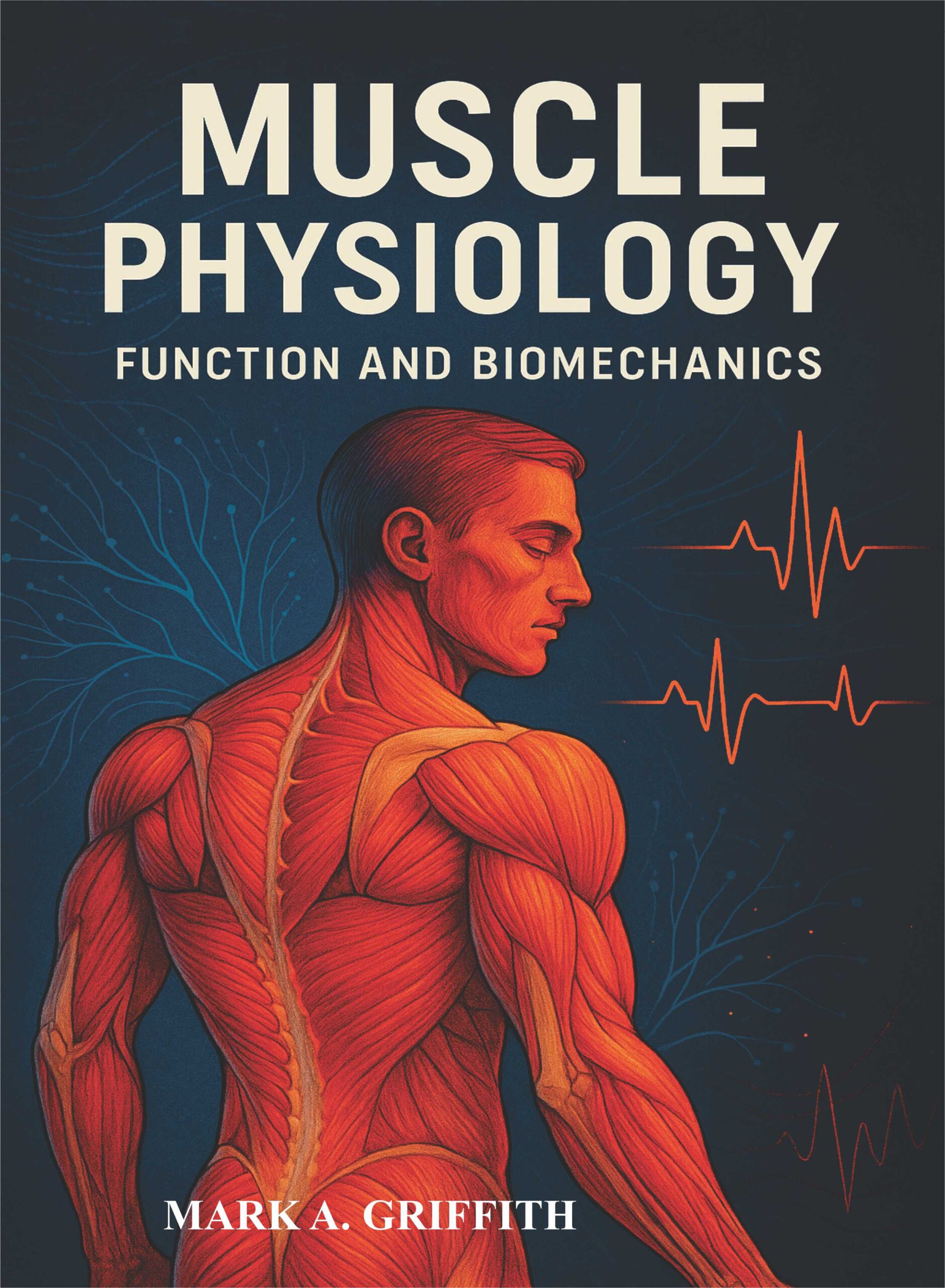
This book presents a detailed exploration of muscle physiology, examining the mechanisms that convert chemical energy into mechanical force and movement. It begins with the fundamental structure of muscle tissue, focusing on the highly organized sarcomere with its interdigitating filaments of actin and myosin. The text explains the sliding filament theory, describing how the cyclical interaction between these proteins, powered by ATP hydrolysis, shortens the sarcomere to generate contraction. A central theme is the excitation-contraction coupling process, tracing the sequence from a motor neuron’s release of acetylcholine at the neuromuscular junction to the propagation of an action potential along the muscle fiber membrane, the subsequent release of calcium ions from the sarcoplasmic reticulum, and the final shift in troponin and tropomyosin that permits cross-bridge formation.
The work carefully distinguishes between the three primary muscle types: skeletal, cardiac, and smooth. It contrasts the voluntary, rapid, and powerful contractions of skeletal muscle with the involuntary, rhythmic, and fatigue-resistant nature of cardiac muscle, and the slow, sustained contractions of smooth muscle found in visceral organs and blood vessels. The narrative further explores the functional classifications of skeletal muscle fibers, comparing the fast-twitch, glycolytic fibers used for bursts of speed and strength with the slow-twitch, oxidative fibers essential for endurance and posture. This discussion extends to the principles of motor unit recruitment, where the nervous system finely grades the force of a whole muscle by activating more or fewer of these constituent units.
A significant portion of the text investigates the relationship between muscle structure and its biomechanical capabilities. It details how the arrangement of fascicles whether parallel, pennate, or circular influences a muscle’s force output and range of motion. The book explains the function of muscles as levers, working in concert with the skeletal system to produce movement, stabilize joints, and generate heat.



Reviews
There are no reviews yet.