
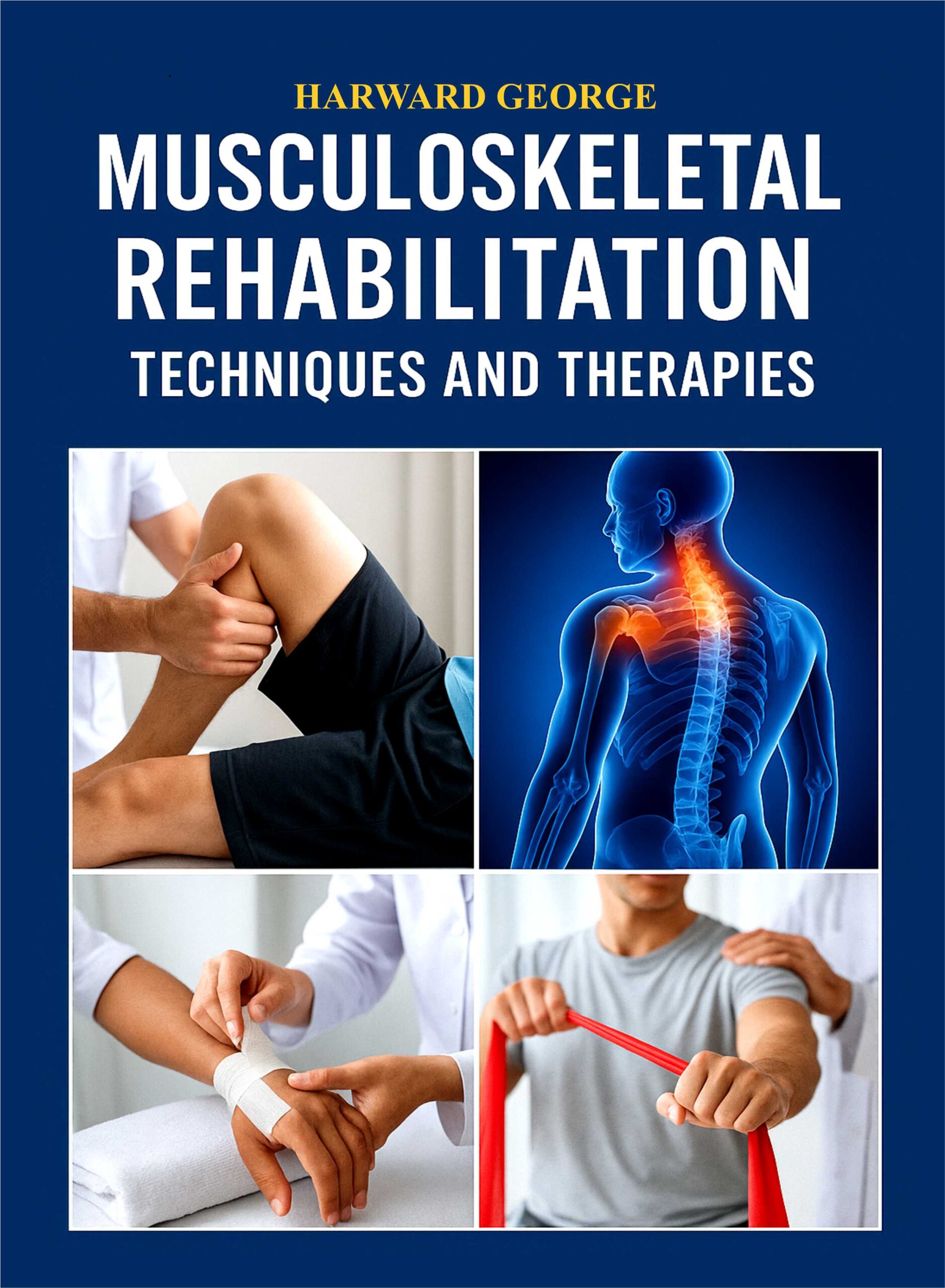
Musculoskeletal Rehabilitation: Techniques and Therapies is a comprehensive academic resource that brings together the foundational principles, diagnostic strategies, and therapeutic approaches essential for the effective management of musculoskeletal conditions. The book begins by establishing the foundations of musculoskeletal rehabilitation, offering readers an understanding of the anatomical, biomechanical, physiological, and pathological elements that underpin injury development and recovery. It presents the musculoskeletal system as an interconnected structure reliant on coordinated function, tissue integrity, and neuromuscular control. Within these foundational concepts, the book emphasizes the importance of adopting a holistic perspective, recognizing that physical impairments often interact with psychological and behavioral factors that influence a patient’s rehabilitation outcomes.
The assessment and diagnosis of musculoskeletal conditions form the next core theme of the book and are addressed through detailed explanations of clinical evaluation methods. Readers are guided through the systematic approach clinicians use to identify movement dysfunctions, biomechanical imbalances, and soft tissue impairments. The book highlights the significance of subjective examination, physical assessment procedures, special tests, and functional evaluation to ensure accurate diagnosis and individualized treatment planning. Modern imaging techniques and their role in supporting clinical decision-making are also discussed, illustrating how technology complements clinical reasoning rather than replacing it. By focusing on assessment as a dynamic and ongoing process, the book demonstrates how careful observation and reassessment guide the progression of treatment throughout rehabilitation.
Therapeutic exercise principles are presented as one of the central pillars of musculoskeletal rehabilitation, with the book outlining the role of exercise in restoring strength, endurance, flexibility, and neuromuscular coordination. The authors explain how exercise prescription must be tailored to each patient, taking into account injury stage, movement deficits, and functional goals. Throughout this section, the book integrates scientific evidence with clinical insights, emphasizing progressive loading, motor control training, and movement retraining as essential components of effective rehabilitation. The text reinforces that exercise is not merely a tool for physical improvement but a modality that empowers patients by enhancing their self-efficacy and participation in their recovery.


Reviews
There are no reviews yet.